ACA News

ACA Meeting with Arts Council England

ACA Meeting with Arts Council England

ACA meeting January 11th with  Anne Appelbaum and Lindsey Pugh Senior Officers Children, Young People and Learning at Arts Council England, with David Wood, Chair and Vicky Ireland Vice-Chair, as suggested by Sir Peter Bazalgette, Chair of Arts Council England.

Aim of meeting

To find out about ACE current activities and thinking
To introduce ACA to officers
To share concerns
To consider solutions

Click here to read the report.


Raising a question with the House of Lords

Raising a question with the House of Lords

ACA meeting with  Baroness Bonham Carter’s DCMS policy group at the House of Lords

David Wood (Chair) and Vicky Ireland (Vice Chair) were invited to speak to this group, thanks to Patron Baroness Floella Benjamin.  Baroness Jane Bonham Carter is the Lib Dem spokesperson for Culture, Media and Sport.  Between 15-20 people attended, a mixture of parliamentarians and outside individuals who are invited because they have a particular CMS interest.  The aim of the group is to identify policy areas the group can work on and formulate an approach to oral questions in the house.

The aim of our visit was to have a question raised on our behalf, in the House of  Lords.

Click here to read the report.


Autumn Statement response

On 25 November 2015, Chancellor George Osborne delivered his autumn statement, announcing that funding for Arts Council England (ACE) will increase by around £10 million by 2019/2020. Other pledges included £150 million for The Science Museum, British Museum and Victoria and Albert Museum to replace storage facilities; £78 million towards The Factory, Manchester and £4 million for Birmingham Arts Hub.

ACE chair, Sir Peter Bazalgette has acknowledged the importance of campaigners within the arts sector in this victory. The expected cuts have been avoided through the collaboration of ACE and the Department for Culture, Media and Sport (DCMS), as well as through valuable nationwide campaigns such as What Next?’s arts4britain campaign.

Whilst cuts to local governments, changes to the education system and on-going devolution leave much work to do, this is a moment to celebrate the impact of a unified campaign to protect arts and culture in this country.

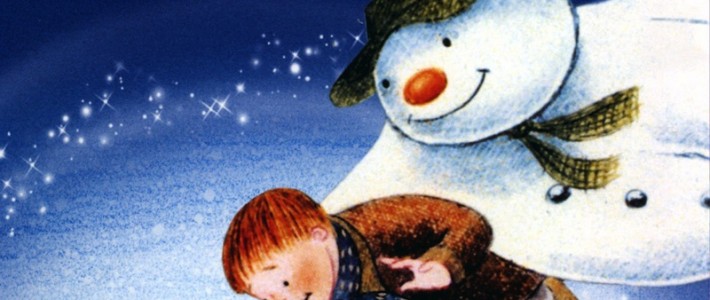
ACA Inspiration Event The Snowman and Peter and the Wolf

ACA Inspiration Event The Snowman and Peter and the Wolf

Milton Court Concert Hall, The Barbican pre-concert talk presented by Neil Brand for Action for Children’s Arts.

How does music fly?

1pm, Saturday 19th December
Free to ticket-holders for the 1.30pm performance.

A fascinating introduction for children and adults about how music helps to tell a story. Writer, composer and silent film accompanist Neil Brand will explore flying music in films such as How to Train Your Dragon, Superman and Star Wars. The audience will be invited to contribute ideas for a flying theme, improvised by Neil at the piano.

Click here for more details.

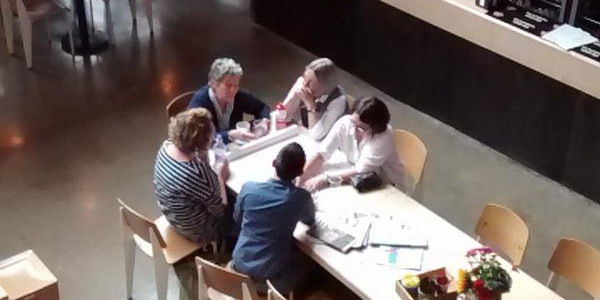
ACA Roundtable

ACA Roundtable

Earlier this year, ACA sent a survey to members asking them to suggest potential causes for a decline in professionally produced arts for children. The survey identified some key areas that need to be addressed, regarding restrictions in funding and limitations in the National Curriculum itself.

Survey respondents have been invited to attend a round table hosted by ACA at The Young Vic on Tuesday 22 September. In this session, we will discuss the issues presented, aim to find a sustainable course of positive action, and examine how ACA can help further raise the profile of children’s arts.

If you are interested in following the conversation, or contributing your own thoughts, follow us on Twitter @ChildrensArts and tweet us on the day using #….. You can also keep an eye on our website and Facebook page for updates after the event about findings, and future related action.

ACA Round Table Report

ACA is supporting Bacc for the Future campaign and we urge all our members to sign the petition:

ACA is supporting Bacc for the Future campaign and we urge all our members to sign the petition:

www.baccforthefuture.com/sign-the-petition.html

The Department for Education is planning to make the five English Baccalaureate (EBacc) subject areas compulsory for all secondary school pupils. The EBacc list of subjects contains no creative arts subjects.

It will make a narrow list of five subject areas compulsory – maths, English, sciences, languages (ancient and modern) and history or geography. If the proposals go ahead, creativity in schools would be damaged and there would be little room in the school day for the arts, music and drama.

Numerous studies have demonstrated both the lack of evidence for the choice of subjects in the EBacc and the harmful impact it has had on cultural and creative subjects in schools.

We know that creativity is educationally and economically valuable and it is valued by the British public so we are working together to urge the Government to reconsider their proposals.

Exclusion of music, art or culture from state secondary school core subject English Baccalaureate requirements – Lord Aberdare 22 July 2015, Lord  Aberdare asked a question in the House of Lords about the ommision of creative subjects from the English Baccalaureate

ACA Petitions Society Of London Theatres

ACA Petitions Society Of London Theatres

ACA has written to the Society of London Theatres asking for a change in the Olivier Awards to create a much needed new award, Best Production for Young Audiences.

Read the full letter here

If you feel strongly that the Best Entertainment and Family category would be best split into two awards, one for Best Entertainment, the other for Best Production for Young Audiences, ACA suggests that you should send a letter to

Society of London Theatre (Olivier Awards),
32 Rose Street,
London, WC2E 9ET
.


An Open Letter

To:
Alan Davey, Chief Executive, Arts Council England

From:
Action for Children’s Arts
Theatre for Young Audiences UK

Dear Alan Davey,

We are writing on behalf of the membership organisations, Theatre for Young Audiences UK (TYA UK) a member of Global Association ASSITEJ and Action for Children’s Arts (ACA), who between them represent more than 400 independent artists and organisations committed to the arts for children and young people.

We are writing to raise our collective concerns about the positioning of the arts for young people in the recent This England report.

As an artistic community dedicated to developing the arts for, by and with children and young people, we welcome the centrality of Goal 5 in the Arts Council’s 10 year Strategic Framework. We share your belief that every child and young person should have the opportunity to experience the richness of the arts. We also share your concerns about the provision of non-core arts subjects in the curriculum, as drama and theatre particularly, become increasingly marginalised within schools.

In Great Art and Culture for Everyone, Goal 5 is defined in terms of actions and outcomes focused on the ambition that children and young people have the best current and future artistic lives they can have and that ‘they are able to develop their artistic capabilities and engage with, and shape, the arts’.

We support the view that the arts should be a holistic and enriching part of childhood, not just skewed to educational and participatory activities. There is no doubt that the centrality of children and young people’s entitlement to culture within the strategy is a significant move forwards.

However, the opening statement under Goal 5 of the This England report reads as follows:

“Children and young people represent both the creative talent of tomorrow, and our future audiences” (pg 29)

Whilst this statement is true, the fact that no other entitlement of children is outlined, which recognises children as creative beings; as participants, as artists, as decision makers as well as audiences, now, is hugely problematic.

Fundamentally, as you know, arts experiences at their best are a way of investigating and understanding our world and our feelings and children and young people’s engagement is no less important, we would argue more so, than that of those older than them.

For those of us who are fortunate enough to work in this field, there is little doubt that quality early arts experiences inspire hearts, challenge minds and awaken imaginations in a profound way. The role of young people as ‘future audiences and future talent’ is disappointingly regressive and significantly out of kilter with ACE’S own Great Art for Everyone and with the artistic community who know and understand the value of work for, by and with children and young people.

Documents such as This England are important statements about the role of culture in our national life and influence the policies that will shape our cultural diet in the future. We therefore ask you to review this articulation of policy and recognise that our shared primary objective should be to provide children and young people with art of the highest quality because it should be a crucial and enriching part of everyone’s childhood.

We look forward to your response.

Yours sincerely,

David Wood OBE, Chair, ACA
Steve Ball, Chair, TYA England
Nina Hajiyianni, Chair, TYA UK

On behalf of the membership of TYA UK and ACA.